Showing posts with label Government Info. Show all posts

Tuesday, September 23, 2014

Election Day is Approaching - Are You Registered to Vote?

From the USA.Gov blog:

2014 is a mid-term election year. All 435 seats in the U.S. House of Representatives are contested, as well as 36 of the 100 U.S. Senate seats. Gubernatorial elections will be held in 36 states and three territories, along with many state and local races.
Voting rules vary from state to state, but NOW is the time to make sure you are registered, your registration is up-to-date, and you’ve applied for an absentee ballot, if you need one.
Remember to:
  • Find out if your state allows early voting
  • Check your polling place and its hours
  • Schedule assistance getting to the polls, should you need it
  • See if your state requires official ID in order to vote
Also, you may want to consider volunteering by working the polls. Do you have kids? This is a great opportunity to educate them about democratic process and teach them about elections and voting. And of course, you want to research your candidates and make educated choices before you vote. This time of year can sometimes be tense, so remember that voter intimidation is illegal, and you should report it, if you feel you’re being intimidated.
Don’t be caught off-guard and unable to vote on election day, check and be sure you have everything you need to cast your ballot.

Read about this topic in Spanish.

Friday, September 19, 2014

Free Webcast Walks you through Retirement Savings

From the USA.gov blog:

From the Department of Labor
Many of us are living longer and will have healthier and more active years in retirement. That makes saving for retirement even more important.
Don’t let the math put you off. EBSA’s Savings Fitness online worksheets make it easy: Enter your information, and the calculations are done for you. In recognition of National Hispanic Heritage Month, we are pleased to share with you the online worksheets in Spanish, as part of our publication Su Dinero y Futuro Económico.
Savings Fitness and Su Dinero y Futuro Económico have interactive worksheets that can help you:
  • set financial goals,
  • calculate your net worth,
  • estimate how much to save for retirement,
  • develop a cash flow spending plan (budget), and
  • make a plan to reduce debt.

In addition, we are holding a webcast in Spanish on September 18 to walk you through the worksheets and give you a chance to ask questions. Please join us. An archived English-language webcast is available on EBSA’s website.
Retirement may seem like it’s a long way off. But the best time to save, regardless of your age, is now. The earlier you start, the more prepared you’ll be when you are ready to retire. If your employer sponsors a retirement savings plan, that is a great place to save. However, not everyone can; only 54 percent of all America’s workers and 38 percent of Hispanic workers have a retirement plan at work. If your employer doesn’t offer a plan, it is even more important that you save on your own.
Regardless of whether or not you have started to save for retirement, and whether you need the information in English or Spanish, EBSA has some tools to get you started, answer your questions and track your progress.
The important thing is to get started today. Fill in your information, let the worksheets do the math, and take the first steps towards a secure retirement.

Thursday, September 18, 2014

Raising Non-Violent Kids

From the USA.gov blog:

Your child’s environment – whether at home, at school or socially – can greatly influence how they may behave in the future.
FindYouthInfo.gov, a government website focused on youth issues, found that in 2012, more than 630,000 young people between the ages of 10 and 24 were admitted to the hospital due to violence-related injuries.
If you’re worried that your child is at risk for violent behavior, there are some factors that may indicate a problem.
Risk factors for violent youth
During their teen years, some kids may behave violently because of some risk factors found in their environment.
Note: Some of these risk factors may be out of your control. However, it is recommended that you keep them under consideration.
At home
From an early age, young people could be exposed to:
  • Violent behavior between parents
  • Severe punishments
  • Parents who are frequently absent or don’t pay attention to their children
  • Rejection or emotional distance from parents
  • A broken home
At school
Youth may exhibit behavioral problems such as:
  • Teasing or bullying other students
  • Skipping class
  • Exhibiting either aggressive or introverted behavior
  • Difficulty concentrating or exhibiting hyperactive behavior
  • Developing learning issues or failing classes
In society
Young people could be considered violent if they:
  • Harass or provoke kids that are their same age or younger
  • Have been arrested before age 14 for committing a crime
  • Belong to a gang or other violent group
  • Take drugs or drink alcohol
  • Have been treated for psychological or emotional issues
Tips to prevent youth violence
You can help prevent violent behavior in your child by following these recommendations:
  • Spend more time with your child and include everyone in family activities.
  • Don’t argue with your spouse in front of your child.
  • Form a bond with your son or daughter. Communicate with your children if they have any problems or issues.
  • Make respect and open communication a priority in your home.
  • Do not give out severe or violent punishment.
  • Be aware of your child’s friends, but do not be overprotective.
Resources
STRYVE is the Centers for Disease Control and Prevention’s national initiative helping families and communities prevent youth violence.
FindYouthInfo.gov is a collaboration among 18 government agencies that supports programs and services for the prevention of youth violence.

Read this note in Spanish.

Tuesday, July 29, 2014

Reminders from the Secretary of State

For the first time, Michigan voters can sign-up for free text or email reminders from the Secretary of State's office whenever an upcoming election is around the corner.  To sign-up, go to Michigan.gov/sos and click on the red envelope.  A similar service is also available to remind drivers when it's time to renew their license plate tabs. 

Friday, June 13, 2014

Federal Resources for Food and Nutrition Planning

News concerning the debate over changes to the School Lunch Program has brought the topic of child nutrition and health to the forefront, in recent weeks. As government and school officials debate this important topic, Government Book Talk takes a look at the Food and Nutrition Information Center Resources CD-ROM currently available from the GPO Online Bookstore.
Resource Lists CD-ROMThe Food and Nutrition Information Center Resources CD-ROM from the U.S. Department of Agriculture (USDA), Food and Nutrition Information Center (FNIC) contains a plethora of useful information related to various food and nutrition programs, such as the National School Lunch Program. It particularly offers guidance to help nutrition professionals and consumers locate information and materials on specific food and nutrition topics, such as Child Nutrition and Health, Food and Nutrition Education, School Food Service, and much more. Compiled by Nutrition Information Specialists, these Resource Lists provide resources in a variety of formats including articles, pamphlets, books, audio-visuals, and Web links.

This resource list excerpt from 2008 for educators provides resource information on cultural and ethnic food nutrition.This resource list excerpt from 2008 for educators provides resource information on cultural and ethnic food nutrition.
The vast information contained on this CD-ROM from the National Agriculture Library collection will prove to be a great resource for parents, educators, school food service professionals and child care providers. Child Nutrition Programs including before/after school and children’s summer municipal camp programs will also benefit from these resource lists for nutritional guidance and food planning for their summer and new school year child nutrition initiatives.
The FNIC website contains over 2500 links to current and reliable nutrition information.The FNIC website contains over 2500 links to current and reliable nutrition information.
About the FNIC
According to its website, the FNIC is a leader in food and human nutrition information. Located at the National Agricultural Library (NAL) of USDA, the FNIC provides credible, accurate, and practical resources for nutrition and health professionals, educators, government personnel and consumers. To learn more about the FNIC and its various resource lists topics visit the FNIC website.
In addition to the Food and Nutrition Information Center Resources CD-ROM, the USDA has published the following print publication focusing on nutrition and diet, which is also available from the U.S. Government Bookstore.Dietary Guidelines for Americans
The Dietary Guidelines for Americans, 2010 offers advice regarding nutrition to promote health and to reduce risk for major chronic diseases through diet and physical activity. The publication is oriented toward policymakers, nutrition educators, nutritionists, and healthcare providers. It summarizes and synthesizes knowledge regarding individual nutrients and food components into recommendations for a pattern of eating that can be adopted by the public. Key Recommendations listed by chapter include: Balancing Calories to Manage Weight; Foods and Food Components to Reduce; Foods and Nutrients to Increase; Building Healthy Eating Patterns; and Helping Americans Make Healthy Choices. It also explains the new food plate which replaced the food pyramid.

How can I get these federal resources on Food and Nutrition Planning?
Shop Online Anytime: You can buy these and other publications (with FREE Standard Shipping worldwide) from the U.S. Government Online Bookstore website at http://bookstore.gpo.gov:
Shop our retail bookstore at 710 North Capitol Street NW, Washington, DC 20401, open Monday-Friday, 9am to 4pm, except Federal holidays, (202) 512-0132.

Order by Phone: Call our Customer Contact Center Monday through Friday, 8 am to 5:30 pm Eastern (except US Federal holidays). From US and Canada, call toll-free 1.866.512.1800. DC or International customers call +1.202.512.1800.

Visit a Federal Depository Library: Search for U.S. Government publications in a nearby Federal depository library, such as Hackley Public Library!  You can find the records for most titles in the Catalog of U.S. Government Publications or CGP.

About the author: Trudy Hawkins is a writer and marketing specialist in GPO’s Publication & Information Sales Division supporting the U.S. Government Online Bookstore (http://bookstore.gpo.gov).

Monday, April 28, 2014

Secretary of State announces veteran designation for licenses and ID cards


Beginning May 1, Michigan veterans can display their proof of service right on their Michigan driver's license or state ID card, making it easier to receive benefits that often go unclaimed, such as retail discounts, promotions and special offers.  The new designation is available to all honorably discharged Michigan veterans and is free of charge when renewing a state license or ID or applying for one.


Friday, November 15, 2013

Tuesday, November 12, 2013

How you can help Typhoon victims

The U.S. Government is providing $20 million in immediate humanitarian assistance to benefit populations affected by Typhoon Haiyan, including the provision of emergency shelter, food assistance, relief commodities, and water, sanitation, and hygiene support.

How you can help:  USAId

Tuesday, November 5, 2013

Keep Everyone Healthy This Winter with These Flu Tips

From the USA.gov Blog

As fall becomes winter, not only do the warm coats and scarves come out, but common illnesses such as colds and the flu join us too. While you can’t always avoid getting the flu, there is plenty you can do now to help you and your family prevent the pesky sickness. We rounded up these helpful resources for you from the government so you don’t have to go digging for reliable information to keep your family healthy:
  • The Food and Drug Administration (FDA) offers tips on the differences between a cold and flu, how you can prevent both, what to do if you’re already sick, and advice on over the counter medicines. You can get it all online or even order a hard copy publication sent to your house.
  • It’s easy to follow the top link when you do an online search, but remember that not all sources are trusted ones. Flu.gov is the official government website where you can enter your zip code to find out where you can get a flu shot, get advice for who is most at risk, and learn how you can help care for loved ones who get the flu.
  • Like your information on the go? The Centers for Disease Control and Prevention (CDC) has an app for you. With the “CDC Influenza” app, you can find national flu activity information, as well as vaccine recommendations and videos on how to protect your family.
  • Even though it’s been a few years since the H1N1 pandemic flu was national news, it is another strand of the flu to always be mindful of. The 2013-2014 flu shots cover this strain of the flu, plus others. Learn more about this year’s flu season and shots from the CDC.

IRS Warns of Phone Scam

Image description: The IRS is warning of a phone scam targeting tax payers.
Scammers are calling tax payers and telling them they owe the IRS money and need to pay it immediately through a pre-loaded credit card or wire transfer.
If you don’t pay, the scammers claim you could be arrested, deported or have your driver’s or business license suspended.
Remember, the IRS will never initiate contact with you over the phone, email or social media to request personal information.
Visit IRS.gov to learn more about the scam and how to report it.

Image description: The IRS is warning of a phone scam targeting tax payers.
Scammers are calling tax payers and telling them they owe the IRS money and need to pay it immediately through a pre-loaded credit card or wire transfer.
If you don’t pay, the scammers claim you could be arrested, deported or have your driver’s or business license suspended.
Remember, the IRS will never initiate contact with you over the phone, email or social media to request personal information.
Visit IRS.gov to learn more about the scam and how to report it.

Friday, November 1, 2013

The Health Insurance Marketplace

From the USA.gov Blog:

The Health Insurance Marketplace: What It Offers and How to Register

When applying for health insurance, you usually have to share personal information with each private insurance company to find out how much a potential health plan costs. In the Health Insurance Marketplace, you have a simplified way of finding health insurance, comparing plans and reviewing coverage options from different providers.
In the Health Insurance Marketplace, you will need to share your personal information just once and you’ll get:
  • the ability to compare different insurance companies and buy the health insurance plan of your choice
  • if you qualify, a new tax credit to help pay premiums for health coverage based on income level
  • if qualified, support for Medicaid or the Children’s Health Insurance Program for Children (CHIP) based on income level
It is important to know that when you apply for health coverage through the marketplace, you need to give more information than is required by individual insurance companies. Additional information is needed to provide medical coverage based on income. In the marketplace, you will have to share the social security number of each family member, income information, details of your employer and any insurance you may have, including Medicare insurance.
By law, each person must have health insurance in 2014 or will pay a fine ($95 per adult, $47.50 per child or 1 percent of your income, whichever is the higher amount).

Ways to Register

There are four different ways you can register for health insurance through the Health Insurance Marketplace:
By Mail: Download the instructions (PDF) and application form (PDF). Complete your application and submit the form to:
Health Insurance Marketplace
Department of Health and Human Services
465 Industrial Blvd
London, KY 40750-0001
By phone: Call 1-800-318-2596, available 24 hours a day, or 1-855-889-4325 (TTY).
In person: To find local help, search by city and state or zip code.
Online: You can apply online at healthcare.gov.
The open enrollment period in the Health Insurance Marketplace began on October 1, 2013 and ends on March 31, 2014.
Remember that no medical coverage obtained will begin before January 1, 2014.

Read this post in Spanish.

Tuesday, October 1, 2013

How to protect yourself against health insurance scams

From USA.gov

Many people are ready to enroll in the Health Insurance Marketplace, allowing them to choose health coverage that meets their needs and budget.
Unfortunately, there are scam artists ready to take advantage of you. They ask for personal information and other details to then take your money.
The Federal Trade Commission has already received reports about scams in which people call to offer discounted health plans and enrollment discounts.
Protect yourself against fraud
Follow these guidelines to protect yourself against fraud and scams:
  • Ignore calls from people who say they’re government officials who want you to verify or give out personal information.
  • Identify the types of calls from scam artists to reject them.
  • Do not respond to calls from people offering to help you choose or enroll in a health insurance plan.
  • Avoid sharing your bank account, credit card or Social Security number to people who say they’re with the Health Insurance Marketplace.
To report a scam or report someone for fraud, you can file a complaint with the Federal Trade Commission or call 1-877-382-4357.

Tuesday, September 24, 2013

Safe Medication Use


Millions of people benefit from FDA-approved medicines. However, when medicines are not used correctly, they can cause serious injuries or even death. With the number of Americans using multiple prescription drugs growing each year, safely using medication has never been more important. Follow these four steps to avoid common medicine mistakes:
   
1.Read the Label.

Before you take any medicine, read the label. It should show:
  • The list of ingredients. If you know you are allergic to anything in the medicine, don’t use it. Ask for a different medicine.
  • Warnings. Read these carefully, and take note.
  • The expiration date. Do not use a medicine after the date on the bottle. It may not work as well.
 
2.Keep a Record
 
Make a list of the medicine you take, including vitamins, and keep it with you. Things to write down:
  • What is the medicine’s name?
  • How much should I take?
  • How long should I take it?
 
       Graphic with four women describing safe medication use and medication use facts. Click for full description.
Share our infographic! The graphic lists four simple steps you can take to promote the safe and proper use of prescription and over-the-counter medications. Visit our infographic page to see a larger image and learn more about safe medication use or flickr disclaimer icon  for even more sizes.
 

3.Talk to your doctor or pharmacist about your medicines.

Good questions to ask are:
  • If I forget to take it, what should I do?
  • Should I take this on an empty stomach or with food?
  • What problems should I watch for?
4. Avoid Problems
Medicines can cause problems or side effects, such as sleepiness, headaches, or rashes. Ask your doctor or pharmacist about possible side effects. To avoid problems:
  • Organize your medicines.
  • Don’t skip taking your medicines.
  • Don’t share medicines.
Interesting Facts about Medicine Use
  • Eighty-two percent of U.S. adults take at least one prescription drug per week.
  • Twenty-nine percent of U.S. adults take five or more prescription drugs per week. 
  • U.S. spending on prescription drugs reached $234.1 billion in 2008.

 You can help promote information to help keep women and their families safe: share our infographic, watch the video, and download our publications related to medicine use.


      The Food and Drug Administration (FDA) Office of Women's Health has created a public service announcement (PSA) titled "Use Medicines Wisely". The PSA provides several tips to encourage the public to safely use their prescription and over-the-counter medicines. 


Download or order any of the free fact sheets and brochures listed on this page. Simply click on the link or go to the Free Publications website.

These booklets provide information on FDA-approved products for high blood pressure, depression, menopause, high cholesterol, birth control, HIV, and smoking cessation.

My Medicines: A Medicine Recordkeeper 

Use the My Medicines brochure to help you keep track of the medicines you take. This brochure is available in English, Spanish, Arabic, Polish, and 10 Asian/Pacific Islander languages.  


Fact Sheets

These one-page fact sheets provide easy-to-read information on safe medication use.

Posters


Michigan Health Insurance Marketplace to Launch October 1

Michigan’s federally operated exchange, the new regulated, competitive, consumer-friendly Health Insurance Marketplace, will open for business on Oct. 1, 2013, according to a new report released by the Michigan League for Public Policy.

The Marketplace is designed to help individuals without affordable employer coverage and small businesses compare options and purchase quality healthcare coverage. The Health Insurance Marketplace website and toll-free number (800-318-2596) are available to provide general information. Michigan-specific information will be available starting Oct. 1, 2013, when open enrollment begins.

Monday, September 23, 2013

4 Steps to getting covered in the Health Insurance Marketplace

From USA.gov:  https://www.healthcare.gov/blog/4-steps-to-getting-covered-in-the-health-insurance-marketplace/
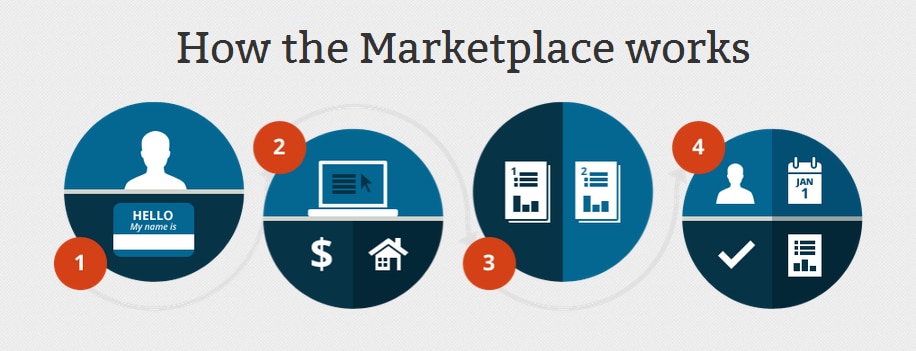
 How the Marketplace works: Create an account, apply, pick a plan, and enroll!
You can apply for health coverage, compare all your options, and enroll in a plan in one streamlined application through the Health Insurance Marketplace. When open enrollment begins October 1, 2013, you can fill out your application and see the health coverage options available to you.

1. Create an account

First provide some basic information. Then choose a user name, password, and security questions for added protection.

2. Apply for Marketplace coverage

Enter information about you and your family, including your income, household size, and more. Use this checklist now to help you gather the information you’ll need.

3. Pick a plan

Next you’ll see all the health insurance plans and programs you’re eligible for and compare them side-by-side. You’ll also find out if you can get lower costs on Marketplace coverage.

4. Enroll

Choose a health insurance plan that meets your needs and enroll! Coverage starts as soon as January 1, 2014.
If you need help with your Marketplace application, there are people trained and certified to help you understand your health coverage options and enroll in a plan in every state. And remember that you can contact us anytime by phone or live web chat for help with a Marketplace question.

Tuesday, July 30, 2013

529 Plans

From the USA.gov Blog:

Start planning for your children’s college today with a 529 Plan.

In Michigan we can use Michigan Education Savings Plan or MESP

Friday, July 19, 2013

How to get Food Help

From the USA.gov Blog.

If you or someone you know struggles to feed their family, you may qualify for food assistance.
There are many different food assistance programs, and this publication explains each program and who is eligible.

Tuesday, July 16, 2013

Finding a Job

From the USA.gov Blog:

Get the Resources You Need to Find a Job

Looking for a job takes time, dedication, and hard work, but you can ease the process by getting organized and finding the right help.
CareerOneStop is a website created by the Department of Labor to help you prepare for your job search, access job searching tools, and find local career centers where you can get personalized help on everything from writing resumes to interviewing for a job.
CareerOneStop can help you:
1. Explore careers. Learn more about yourself through self-assessment tests and browse different types of occupations.
2. Determine wages and salaries. Compare wages and salaries for specific positions, use cost-of-living calculators and find the highest paying jobs by location.
3. Create a resume. Get assistance in creating one of the most important documents you will need for your job search: a résumé. Find tips on how to improve your résumé, sample résumés, and information on how to write a cover letter.
4. Look for jobs. Use CareerOneStop’s tool to find jobs across the country. You will learn who’s hiring, and where and when the job was posted. USAJOBS is also a good tool to find jobs with the federal government, but keep in mind that many of these jobs require applicants to be U.S. citizens and speak English.
5. Prepare for a job interview. Get tips with how to get and prepare for job interviews, including setting one up, finding people and making contacts.

Training and Development

Besides helping you prepare for your job search, CareerOneStop also has information to help you get the education and training you need, and find ways to pay for it:
  • Short-term training designed to further your skills for specific professions.
  • Technical certifications on a wide range of jobs including medical assistants, automotive technicians, electricians, etc.
  • Financial aid and scholarships to help you finance loans and grants if you choose to pursue higher education.